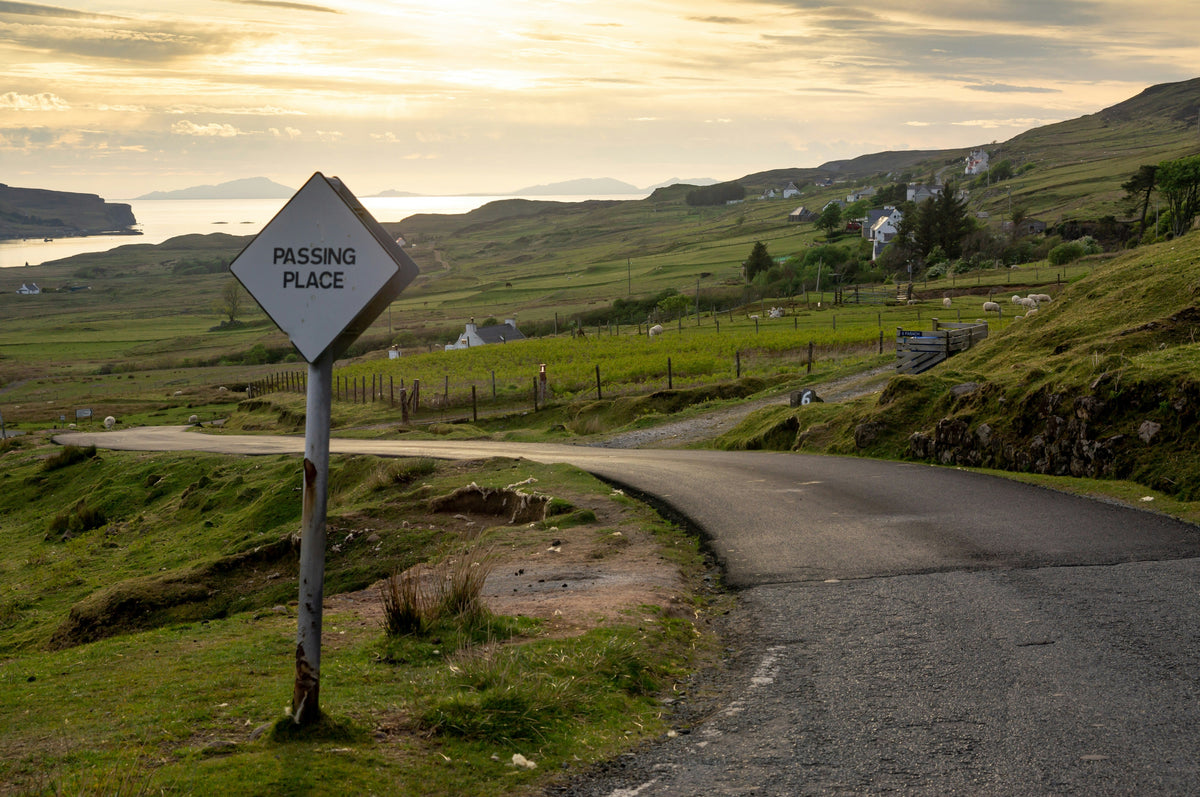
The Tour comes to Britain the way a heavy rain comes to a hill town: the road goes quiet an hour before, people lean out of upstairs windows, and then everything you own is suddenly in the wrong place. I stood on a Yorkshire verge in 2014 with a flask of tea gone lukewarm, close enough to the barrier that a motorbike's exhaust blew my hair flat, and listened to a crowd six deep make a noise I had never heard cyclists produce. A stage that lasted four seconds past my toes had been planned for years, financed by committees, and argued over in council chambers I will never see.
The 2027 Tour will do it again, and the route reveal on 22 October gave the bill of fare. The Grand Départ is Edinburgh on Friday 2 July, the third British start after London in 2007 and Yorkshire in 2014. Stage 2 runs 223 kilometres from Keswick to Liverpool, and stage 3 covers another 223 from Welshpool to Cardiff, followed by the first rest day. The race then proceeds through a Cherbourg loop, two time trials (38 kilometres from Blois to Chambord, 33 around Toulouse), the Alps through the Grand Colombier, Sallanches and Les Saisies, and a Pyrenean climax at the Col du Portet, before the 116 kilometres into Paris on Sunday 25 July. The stage table, which I read twice, lists no Alpe d'Huez.
Stage 3 interests me most, because as far as I can tell Cardiff gives Wales its first Tour stage. The Tour has been visiting Britain since 1974, when it crossed the Channel for a single stage at Plymouth, a one-day curiosity that the British press covered as a rumor of the real thing. In 2007 it delivered a prologue through central London that Fabian Cancellara won in front of an enormous crowd, and in 2014 it delivered Yorkshire, which Vincenzo Nibali would carry all the way to Paris. Each visit raised the price, and each region that paid told its taxpayers the same thing: an audience of billions, a tourism windfall, a postcard to the world.
The postcard has a ledger behind it. A Grand Départ costs its host a hosting fee paid to ASO, the Tour's owner, along with road closures, security, accommodation and the construction of a temporary village that exists for three days and is dismantled on the fourth. What the region buys in return is broadcast time and an economic-impact study commissioned by the organizers, which is the only person in the arrangement qualified to measure the benefit and the only one with a reason to find it large. Yorkshire's studies were generous. The honest accounting of whether a village in the Dales was better off in 2015 than in 2013 has never quite been settled, and I suspect it never will be, because the Tour's real product is the feeling of being chosen.
That feeling is what makes the 2027 route a piece of commerce. ASO sells a French institution to foreign regions at a premium, and the regions buy it because the alternative, watching the circus pass through someone else's county, costs more in pride than any fee costs in pounds. Cardiff landing the final UK stage shows how the market for the race behaves: a single owner with one product and a queue of regions, so the price has no reason to fall. Edinburgh will pay for a Friday in July and the Tour will deliver a morning of spectacle, a cavalcade of team buses on Princes Street, and a boost that lasts as long as the bunting.
None of this stops me wanting to be on a verge in July with a thermos. The best sporting events I have stood beside were each three minutes of noise built on three years of paperwork, and I would pay the fee myself for the chance. The practical way to do it is to book early, since rooms along the route will go early, and to bring the flask. The tea will be lukewarm again, and the stage will be over before it matters.
Sources: CyclingStage, BikeRadar