The mud at Unbound had a sound to it this year, a wet suck and release on every pedal stroke, and I spent a good part of the afternoon at the side of a gravel road in the Flint Hills watching strong professionals get off and walk. The ruts had won. Riders who had trained all winter for this were portaging their bikes across a hundred yards of Kansas like it was a river crossing. Then something came through that did not walk.
The wheels were wrong. Too tall, the kind of wrong your eye registers a half-second before your brain supplies a reason, like a doorway built for someone nine feet high. The bike floated a line across the washboard that had bucked everyone else into the ditch, held its speed through the slop, and was gone up the road before I finished forming the thought. Robin Gemperle rode those wheels to the win in Unbound XL. Thirty-two inches of them, front and rear.
I had been calling that wheel a punchline for two years. Standing in the mud, I stopped.
The size nobody asked for, again
Mountain biking has fought a wheel war roughly once a decade, and the script never changes. The 26-inch wheel was scripture for thirty years, the only size a serious off-road bike came in, defended by everyone who had a garage full of 26-inch parts. Then Gary Fisher and a few co-conspirators dragged the 29er into the daylight in the early 2000s, and the same people who swore by 26 explained at length why a bigger wheel would handle like a shopping trolley. The 29er won. Cross-country racing went almost entirely to it.
Halfway through that fight, 27.5 (the old French 650B size, exhumed for the occasion) showed up as the compromise candidate, and the industry split all over again over whether the world needed a third standard. One BikeRadar piece caught a product manager admitting the quiet part about the bigger wheels arriving now: "we hoped they wouldn't be as good." That is the whole history of wheel sizing in seven words. The trade hopes the new thing fails, because the new thing means retooling, and then the new thing wins on the clock and everyone retools anyway.
So when 32 started circulating as a rumor, the reflex was easy. Another size, another standard, another excuse to sell us wheels. The objections wrote themselves. Where do the forks come from. Who makes the tires. How does a normal-height human stand over a wheel that tall without the geometry turning into a chopper. For a long stretch the only people building 32-inch bikes were a small California outfit, DirtySixer, who had been making 32 and 36-inch machines for very tall riders for over a decade, quietly, while the majors looked away. The big wheel lived on the fringe as a fit solution for the unusually large, a craft answer to a niche problem.
Why bigger actually rolls
The physics were never the joke. A bigger wheel meets a bump at a shallower angle, so it climbs over roots, rocks, and ruts that snatch at a smaller one. It carries momentum better once it is rolling, which is exactly what you want across a washboarded gravel road where the enemy is the constant small deceleration of every ripple. A 32 is about nine to ten percent larger in diameter than a 29, enough to feel the rollover and the hold on rough ground, which is why gravel turned out to be the natural home for it before cross-country caught on.
This is also the oldest idea in the sport. The penny-farthing of the 1870s ran a front wheel up near sixty inches for one reason: with the pedals bolted straight to the hub and no chain to multiply them, the only way to travel further per stroke was to make the wheel bigger. Speed lived in diameter. The safety bicycle and the chain drive broke that link in the 1880s, handed gearing the job of speed, and let wheels shrink to something a person could mount without a running start. For nearly a century and a half, diameter and speed went their separate ways. The 32 quietly puts them back in the same sentence, this time for rollover and aerodynamics rather than gear inches. Cycling keeps rediscovering that a big wheel goes well. It just needs a few decades between lessons.
Frankfurt makes it official
Three weeks after the Flint Hills, the show floor at Eurobike answered the question of whether Kansas was a fluke. Canyon rolled out the Lux Era, a cross-country concept built around 32-inch wheels, and dressed it in everything that signals a brand is serious rather than playing: an inverted fork, a computer sunk into the top cap, and a bladed double-decker handlebar that gives a racer an upper and a lower hand position to tuck aero on the fire roads. The pitch underneath it was a number: the average speed of a World Cup cross-country race has climbed from 18 km/h in 2016 to 24 km/h now, fast enough that aerodynamics has started to matter on a discipline that used to treat it as a road-racer's vanity. A bigger wheel that rolls faster and holds speed fits that world precisely.
In a single month the 32-inch wheel went from a custom oddity for tall riders, to the bike that won a 350-mile gravel race through the mud, to a concept on the most-watched stand at the biggest trade show in the calendar. The forks are being made now. The tires are coming. Suspension companies are tooling for it. The same machinery that legitimized the 29er and then the 27.5 has turned over and pointed at 32, and the trade is making the same face it made the last two times.
I keep thinking about the product manager hoping the wheels wouldn't be any good. Gemperle's result in Kansas was the answer to that hope, delivered three weeks before Canyon confirmed it in carbon. The size war is already over. Most of the sport just hasn't checked the results yet.
Next time a rider comes past you at a gravel start on wheels that look a touch too tall for the frame, take the half-second before the laugh and look at how the bike sits on the road. That is what every wheel that ever won an argument looked like at first glance.
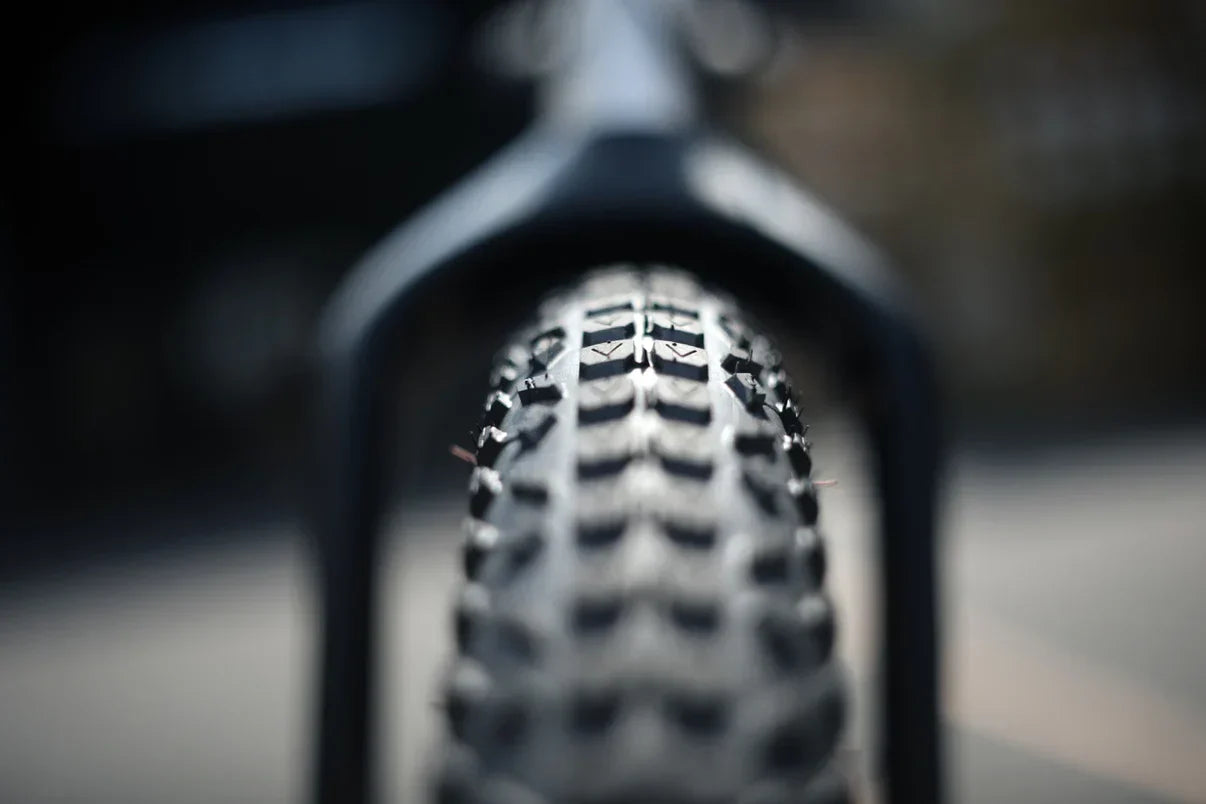
Image: a DirtySixer 32er. Credit: Image courtesy of DirtySixer.
Caption: the wheel size the majors just discovered, built in California for more than a decade.