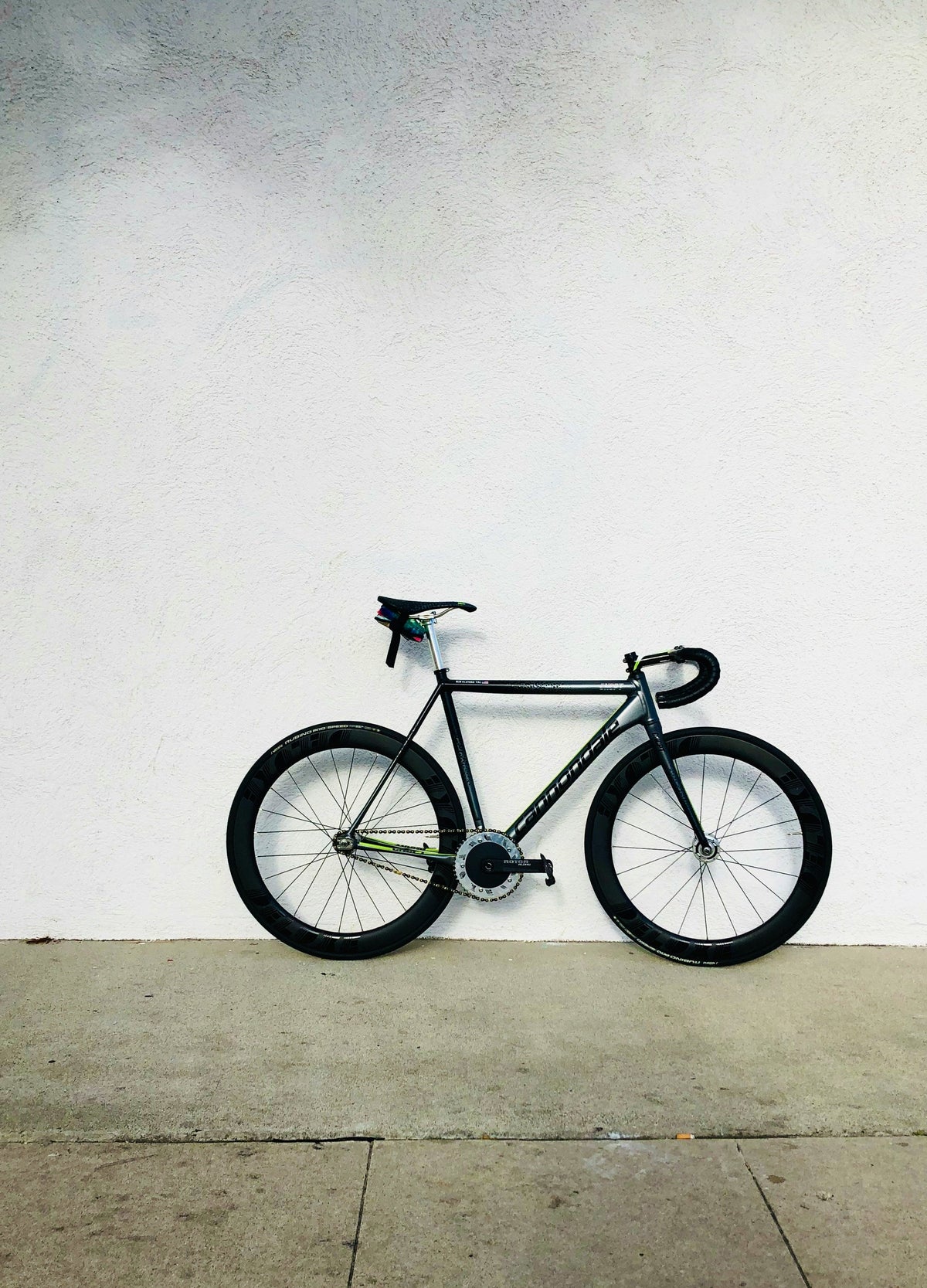
Tap the down tube of an old Cannondale with a knuckle on a cold October morning and the fat aluminum answers with a note like a struck fence post. I did this to a battered CAAD in a Connecticut driveway years ago, breath fogging, the bar tape stiff with frost, and the frame rang long enough that I stood there listening. Nobody who rode those bikes in the 1980s and 90s forgets the sound, or the ride that went with it: a frame so stiff that every seam in the road arrived at the saddle as a personal message, a rear end that went exactly where you pointed it, a decal on the seat tube that said Wilton, Connecticut in a script that looked like a postmark.
That postmark is retiring. On Wednesday 21 October, Cannondale told employees and dealers that it is closing its Connecticut office and filed a notice with the state labor department the same day. The list runs to 143 workers (some remote, a few belonging to Pacific Cycle, the Pon unit that handles Schwinn and Mongoose). First separations land on 21 December, and they roll through phases until 31 December 2027. North American sales and operations move to Santa Cruz, California, global headquarters moves to Woudenberg in the Netherlands, and engineering stays in Freiburg, Germany. Dealers will get one point of contact for Cannondale, Santa Cruz and Cervélo, which are all Pon.Bike brands since the Dutch conglomerate bought Dorel Sports in 2022. The company's own line is that each brand "will retain its own identity, models and relationship with riders."
The name has always been a place. Joe Montgomery and his partners began in 1971 in Wilton, naming the company for the Cannondale stop on the local rail line, and they started by selling bicycle trailers and touring bags to people who rode for the love of it. In 1983 they put their weight behind oversized aluminum tubing, and for a decade the American bike industry shuffled around it, because a frame that stiff and that light made steel look like a decision from a previous century. The early bikes came out of a factory in Bedford, Pennsylvania, stamped Handmade in USA, a phrase that carried enormous weight on a shop floor when the rest of the world's bikes were being assembled in Taiwan. A single-sided fork called the Lefty followed, an odd-looking one-sided design that the brand made its signature.
The decline of that story was gradual and each chapter had its own dignity. Cannondale filed for bankruptcy protection in 2003, emerged under new owners, and in 2009 ended its American manufacturing. The brand kept racing, with Liquigas and later the Slipstream squad carrying the colors into the Giro and Vuelta, but the tubes were by then being welded far from Bedford. Wilton remained as the head office, a building where the people who decided what a Cannondale was still drove to work past the station the company was named for. Now that building closes, and the people who understood what the Wilton script meant on the seat tube go with it.
I find the structure of the move fascinating as a piece of commerce. Pon is gathering three brands with distinct personalities (Cervélo's wind-tunnel monomania, Santa Cruz's mountain-bike cult, Cannondale's aluminum heritage) behind a single sales desk, which makes sense for a dealer who would rather make one phone call than three. A single desk also tends to dissolve the differences it promises to protect. Raleigh went through the same slow dissolve, so did Schwinn, and the pattern in every case ran the same way: the factory leaves first, then the engineers, then the office with the name on the letterhead, and finally the name itself becomes a decal applied somewhere else.
The bikes will keep coming, and some of them will be excellent. A Freiburg-engineered Cannondale sold through a Santa Cruz office is still a good machine, and the Lefty remains one of the stranger and better ideas of the last forty years. But the Wilton script on a frame built before 2009 now certifies something that can no longer be reproduced at any price, which is the existence of a room in Connecticut where people argued about tube diameter for decades. Anyone holding one of those frames in a garage this winter owns a piece of a collapsed argument, and the next time it rings under a knuckle on a cold morning, the note carries the address of a building that will be empty by 2028.
Sources: Bicycle Retailer, Escape Collective, Bicycle Retailer, 2009 manufacturing end